Pages

Sunday, July 3, 2011

Kibera Reflection #2 - Same-same but different

One of my favorite phrases is “same same but different”. I think that it sums up a lot of things about comparing cultures. Like “are the mountains in Kenya the same as in the US?”  “Yeah, they are same-same, but different.” I think that it is a good way of cutely summarizing the complexity of comparison - things across the globe have some similar features but in other important ways are very different.

Thoughts on being different – The thing about being in Africa is how different you feel, as a white visitor, wherever you go. And the Kenyans go out of their way to let you know how different you are, don’t worry, you won’t forget you look different. From the kids shouting “mzungu” or “howareyou” continuously, to the mzugu-price you are given wherever you go, to the spontaneous marriage proposals, I am continually feeling different from the rest of the crowd. Men stare, women glare, kids shout and smile. Chairs materialize from nowhere so I can sit at a moment’s notice, I am given prime standing/seating, and assumed fragile or unknowing.  I get begged for money and the vendors try to sell me earrings for $20, when I should pay $1. I look different and because of my skin color and my assumed nationality, am treated different. And in many ways, we are different. I grew up in a town with over 400 coffee shops, married a boy YOUNGER than me, seen the Great Wall of China and U2 (twice!), and have a plane ticket out of here. Every so often it is nice to play the mzungu card. For instance, the other day I reached a part of Kibera that required me to jump about two feet from one mud slick to another. Knowing that if I did so I would most certainly embarrass myself (among other less pleasant things) to no end by falling face first into the mud-mixture of Kibera, I decided to pull the mzungu-card and waited at the ledge for someone to come along and offer their assistance, which they did and I gratefully accepted a hand down from the ledge. When I related this story back to my host brother, and told him about pulling the mzungu-card, he laughed at me and said “what other card to you have to pull?” This was a sharp reminder that I am almost completely defined here by being an outsider – by being different.

Thoughts on being same-same – Yet, at the same time, working in Kibera is a reminder that I am the same-same as everyone else around me. There are common threads of humanity that show themselves clearly in Kibera and remind me that I am not so different after all. This extends beyond the need for the basic necessities – shelter, water, food. That much is obvious. There are human needs that are experienced by the people in Kibera just the same-same as they are experience by people in Carrboro, or Bellingham. One example I’ve encountered is the desire for personal growth, especially among the youth. Talking with the young people of Kibera who are around my age, they are striving to be the best version of themselves and to obtain opportunities to further themselves personally, further their education, and to actively expose themselves to new possibilities, all things that are my own priorities. Even though they are hampered by many of the circumstances of living in Kibera and being young and perhaps unemployed, they show great ambition. Another example is curiosity. I am a very curious person and am always interested in different people and their perspectives (My mother can vouch that my first words, well actually phrase, was a child’s version of “what’s that?”). I find that the people in Kibera are very curious and inquisitive. I am forever being asked questions about America, and also questions of what I thought about Kenya before I arrived and how I found it when I came. I am asked about my family, my neighborhood, my diet, how many goats Marty paid for me, and if there are hippos where I come from too. The people are curious about the outside world and are interested in understanding what is going on in the world around them. I find that it is often assumed that because people are extremely poor, or are living in extreme conditions like Kibera, that they do not have the capacity (or time perhaps?)  to ponder, or to daydream, or to simply ask “why does that happen?” People in Kibera do all of these things, and that is another way in which we are the same-same.

People in Kibera and I are the same-same, but different. 

Growing Collards in North Carolina
Growing collards in Kibera

Wednesday, June 29, 2011

You Say Goodbye, I say Hello!

This last weekend we said good bye to a group of researchers from UNC who had been helping with an effort to assess the acceptability of starting a project within CFK to facilitate asset building among youth (basically how to encourage young people to start saving). It was an interesting endeavor to watch and I was sad to see them go. To end their stay, Mary, Julie and I put on our tourist hats and headed to a few of the must-see tourist traps of Nairobi - the elephant orphanage and the Karen Giraffe Center, rounded out with a trip to the swanky mall called Junction for some sushi (yes, that's right, sushi). It was fun to play that role for a day and spend it with other travelers who are only in Nairobi for a very short time.


Let's compare tongues....

okay, you win!

Yesterday, Amy said Hello again to Nairobi and came to stay at Mama's house with me for a few days. She is having struggles clearing her research through the massive amounts of red tape to get a protocol cleared internationally and needed to come to Nairobi to have a few necessary face-to-face conversations. I am happy to play host (or to provide a willing host, thanks Mama!) and have her here for a few days.

In research news, I had a very productive focus group with the peer-youth-educators on Saturday and have had productive follow-up interviews with the staff this week as well. Things seem to be lining up a bit better as I am able to sort out what I am actually going to be able to accomplish during my stay here in Kenya. As in most research projects, and I think especially those taking place abroad, the best-laid plans rarely go through without alteration. I am now feeling like I have a good grasp of what I can - and can not- accomplish during my time here. Onward!

Friday, June 24, 2011

Kibera Reflection #1 - Where is the love?

I have been implored by a number of people to write more about Kibera and the community that I am working with. I apologize for the lack of details, perhaps it is that it is nearly impossible to know where to begin. Although I had seen many pictures and spoke with many people who had visited previously, I was acutely aware that I could not prepare myself for working in Kibera. I was correct. I have had some really great, and some not as great, experiences in Kibera over the last month and I think it is a good idea for me to post some reflections on the community, and all of the happenings there, to give my readers a bit of insight and to help me to process a bit.
The CFK Senior Girls' team in a group hug with their opponents after their game

Because I am working with sexual and reproductive health, I am often contemplating one associated subject (to varying degrees)  -- love.

I overheard a conversation the other day among another researcher and a community member about love and sex and marriage in Kibera. “There is no love in Kibera”, she said, in reference to the fact that many people have sex as a means to an end or part of a casual relationship. Often, this encounter results in an STI, HIV, or an unwanted pregnancy. I have heard innumerous stories of men bolting at the sign of trouble leaving a young girl pregnant or misled. I am told that girls start having sex as young as ten years old, although the most common age I hear is more like 12. It is generally with older men who are able to provide something to the girl. One new friend here, when I asked him why a 12 year old girl would sleep with a much older man, replied “I don’t know, maybe he gives her something, like chips (fries).”  

It is easy to see the spaces in Kibera void of love. Frowning women hunched over a steaming pot of food, young men looking menacing and perceptibly unemployed, pregnant girls who are shockingly young, animals with indescribable injuries. These voids are magnets, drawing the attention of concerned individuals world-wide.

I have made a concerted effort to discover the pockets of love throughout Kibera and have found several, only a few of which are presented here. First, and most obvious, is that I see love in the volunteers of CFK, especially those who are my age. I am always struck with the amount of passion and commitment that the young people have for their community. I think this is because I refer back to the same age group at home and am struck by the absence of the same sacrifice for their community. The young volunteers of CFK change their school schedules, give up jobs and opportunities, and sacrifice time to serve their community. Their love is evident in their participation and in their true and honest interest to see their community prosper.

I also see love in A--, the woman who comes to help Mama clean and cook twice a week and resides in Kibera. Privileged to see her house a couple days ago, she told me about how she had the opportunity to move into a larger, more expensive, home a few doors down but that she passed it up so that she could continue to send her son to a better school outside of the slum. To pay for the transportation, she gave up the opportunity to move into a larger space, understanding the importance of the educational opportunity for her young son. A-- shows love to her son by using almost a fifth of her monthly income to pay for the bus across town, and even more of her income to pay for his school fees (although technically primary education is free here in Kenya). A-- is not alone, many of the mothers I have met have sacrificed greatly for the next generation. I see love in the mamas who go to extraordinary measures for their families.

There is a strong sense of community within Kibera that also sometimes gives off the palpable sense of love. While there are unfortunate and violent exceptions to this, it seems that the members of Kibera are a close family sharing a unique and defining experience. The love is apparent in individuals looking out for one another, offering what little they have to support their neighbors with the understanding that tomorrow they themselves might be in need of assistance. I have heard stories of people risking their own safety to protect others during the post-election violence of 2008 or to provide food and assistance to those who were in need during that period of crisis. People check on their neighbors to make sure that they are alright if they have not come out of their home (I don’t even know the names of my neighbors back in Carrboro). Another new friend told me that her mother took in a baby she found on her street, still covered in blood, hours old, and abandoned, and has raised the baby as her own. The people of Kibera seem to understand that their neighbor’s wellbeing is inextricably tied with their own and this is reflected in the love that the community members have for each other.

So while on the surface there may be tangible absences of love and many other human necessities in Kibera, there are important pockets of hope and understanding that can be magnified with the continued effort of CFK and the other leaders working here.

Monday, June 20, 2011

My Weekend in Pictures

This weekend I met up with Amy in Kisumu, Kenya. It was a perfect weekend of relaxation and I feel really rejuvinated. It was a perfect meeting spot for us. For me, Kisumu was a quiet town with safe(r) streets and fresh air and for Amy, who is stationed in a very very rural area, Kisumu was a bustling town of not one but two grocery stores and plenty of culinary options. We had a great time in the third largest city in Kenya, located right on Lake Victoria. 


A reunion Tusker with Amy

 Small fish in a bucket, smoked fish lined up, or fresh fish in the blue bucket - we ate a lot of fish .

Kids on a school trip admire the tortoise at the Kisumu Museum

The decor at the Kiboko Bay Hotel - Hippos, hippos, hippos

Sunsets over water remind me of home

Sage advice, truly

The Dhau is the local style of boat used for fishing, and for carting tourists around to see the hippos

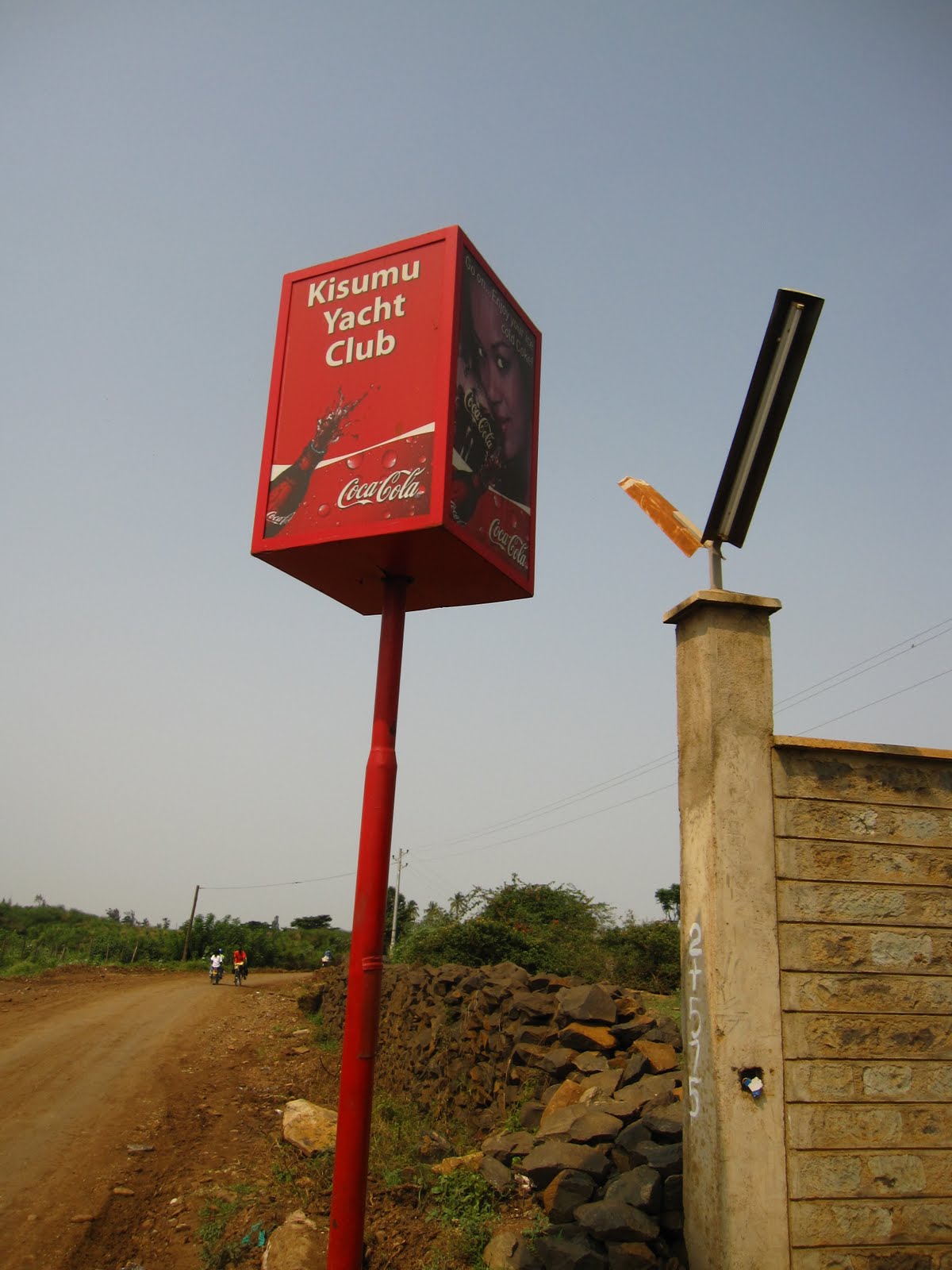
Kisumu Yacht Club

Impala Sanctuary - we saw roaming impalas, zebras, baboons and a four foot monitor lizard 
Along with a few animals in cages. Here Mercy the baboon gives Amy a high five

Amy's first zebras!

Amy, Dunstan and I on our first tuk-tuk ride! 

Did I mention the sunsets?

The bugs were intense

On our requisite hippo-seeing boat trip


Mangrove tree

Fishing boat

Hippos!!

Remnants of my sighting of the President of Kenya (story to follow)
Pink stork and friends with some timely advice - never give up.

Tuesday, June 14, 2011

Progress! And thoughts on research in the developing world, pt 1.

View of Kibera from the roof of the Clinic, the upgraded flats in the distance


These past two weeks I have slowly made progress on my research project. In short, the project is attempting to do a program assessment of the sexual reproductive health program which aims to create a history of the program, understand the context that the program fits into, and understand the obstacles to meeting the objectives to the program. I also intend to help create a way for CFK to evaluate the program in the future. I am so fortunate to work with an enthusiastic and inspiring group of staff and volunteers at CFK. It truly makes my job easier to look forward to coming into the office. I appreciate their openness and willingness at allowing another American to come into their work space and attempt a new project.

I work closely with Ben, the program officer of the SRH program, and over the last couple weeks we have managed to plot out our plan for the summer. Although on paper this looks like only about 40 hours of interviews/focus groups over 6 weeks, this is quite a bit of time. And I am lucky enough to "get" to transcribe each audio recording! Yee haw! But like I said, because I am enjoying my time at CFK and really am interested in the project and in supporting the community of Kibera, the task becomes less of a drag.

Last Thursday I pitched my project via a hastily made powerpoint to the key staff members that I will be interviewing and relying on throughout my stay here. Because it is the intent of the project to be of use to the organization, it is important to have staff buy-in and to emphasize that we both stand to benefit from the time used. I thought about this in terms of some of the discussions we have had at Duke this year about research in the developing world. All too often, students and researchers come into a community, use local resources, and leave with all the necessary data without even once looking back. CFK, and organizations like this, have had experiences like this where they have individuals come for a period of time, invested time and energy and staff into the project, only to be completely left in the dust. When I asked for questions from my audience last Thursday, they were quick to ask (and rightly so) exactly when and where they should expect to see the results. I think they were looking for my flight number for December (I wish). I assured them that not only did they have my word, but also that I had mentors back in the states who had CFKs interest in mind. I didn't take it personally that they were still a bit hesitant, even after my assurances. It isn't my place to judge the individuals out there who do research without the communicating the results with the community back in the developing world (although I may have some thoughts on the matter), but whoever they are, they left a jaded audience for the next guys.

On Monday I had my first real interview with Ben and I managed to make it last for 1.5 hours! I am still working out my methodology as I go and have given myself liberal permission to 'wing it'. The interview went well and consisted mostly of a framework for the program. I was better able to understand what I would need from the other staff members. Because of a severe lack of documentation of almost any type, it is up to these interviews with the staff, volunteers, and participants to complete my project. It is a really good experience for me, almost a sink-or-swim way of learning how to do this, and for all the messiness and uncertainty I am thankful for the opportunity. It just takes one short stroll around Kibera to give me encouragement to complete the project in the best way that I can.

The rest of this week and next I will be continuing to interview the staff and then will move on to the volunteers and finally a handful of participants. This will not be a random sampling of participants, as the number of participants of the SRH program number in the tens of thousands, but a good enough sample to give me an idea of how the program is working.

That's the research update!

I managed to take a few more picture of Kibera under the cover of a troop of Americans visiting the office.

Eat your heart out PNW - Recycling center in Kibera run by CFK's Trash is Cash program

Our neighbors at CFK - a smiling, "how-are-you"ing group of kiddos

Winim Bike Repair Shop

An ad for soap (Ushindi) ironically covered in garbage


The sign for the original Tabitha Clinic

Monday, June 13, 2011

Kibera: A very large slum.

This weekend was great. I got to see some familiar faces (hey Dunstan and Andria!), meet some new friends (hey Jacque!), go to church with Mama (hey, what? They make new-comers stand up in front of the 500+ congregation?) and find two American like malls (hey, you can pay four dollars for coffee in Kenya too!). I took three days away from Kibera to get myself ready for my research that is gearing up this week.

Today while walking through Kibera by myself from the main office to the satellite office, a man approached me. “Hey Mzungu!” He yelled with a broad smile, “Hey! What are you doing here? What are you doing in Kibera?” I replied in my usual way, with a smile or a nod, and usually something short and vague, but before I could get anything out, he yelled:

"Kibera is a very large slum!”

After delivering his earth-shattering revelation that was sure to send me skittering back to wherever I had come from, he turned with a laugh and continued on his way.Why thank you Mister! Granted the anti-malarials I am on bring with it a hazy sense of reality that often blurs the line between dreaming and not, I had, indeed, noticed that Kibera was 

A. Very. Large. Slum.

Here are some friendly faces that I encountered during my weekend. 
Mary - UNC grad student and java buddy

Andria (duke friend) and Jacque (new friend and sister of Dunstan)


Neighbor friend Abby

After picking up my comb, she began and stated simply "There will be pain".

Mama! Picture by Abby.

Dunstan (duke friend) and friendly cups of chai
The clouds here are beautiful. 

Thursday, June 9, 2011

Nairobi is a balancing act

So my time in Nairobi is going by. I am cruising through my second week. For me, the first week is always the hardest because everything is new and everything takes adjustment. And adjustment takes energy. I have found myself in several instances over the last two weeks contemplating the delicate balance that is life as a visitor to Nairobi and Kibera.

Bored vs. Concerned: The most important accessory to have while walking the streets in Nairobi and in Kibera is a poker face. I have been perfecting mine. It is a tricky balance between looking bored (“I have walked this street so many times I couldn’t possibly be new here. Oh here comes another boy with knee high Uggs and a tight purple t-shirt that reads “Frankie Says Chill” on it. Yawn) and still looking like you are interested in the place around you. It is important to look confident as if you routinely navigate through the area to not further draw attention as an outsider. This balance between bored and concerned is especially complicated in Kibera. It is inappropriate to have a shocked look at every turn, although the number of shocking sights and smells is innumerable. On the flip side it is inappropriate to look like the surroundings are mundane, because there is very little mundane about it. It is important to show concern without looking condescending. This requires more finesse than it may seem.  My perfect poker face, which elicited a “are you bored madam” from a random passer-by today, is still in the works.

No personal space vs. keeping your distance: For those who have traveled in areas like this, it is not a surprise that the definition of personal space is very different here from in the US. I bump into countless people each day and squeeze myself between men and cars frequently. People talk to you closely and are more touchy-feely than perhaps is acceptable in the States. While walking, it is important to keep with the flow of traffic by allowing yourself to come very close to those who you are passing. This decision is often simply made for you because of the small walking space on the sides of the road. Allowing yourself to be pushed along shows you are not the paranoid American who knows nothing of Kenya. I don’t mind the closeness of a Kenyan conversation (with a friend) at all. On the other hand, however, it is important to remain the paranoid American and give the selected wide berth to people who may be trouble. When walking, I try to keep my distance from anybody who is stumbling or staring too long, or with too wide a grin. Or someone shouting “Hey Princess, come back to my house and marry me today”. Marriage proposals get an especially wide berth, and a slight chuckle.

Meeting new people vs. ignoring constant pleas for attention: Although the kids are more polite here than in Tanzania, as they should “Howareyoufine” instead of “mzungu mzungu”, their calls and attention are still constant. Today four of us were rushed by a herd of school kids wanting to touch our hair, and lept in the air to do so, their maroon school uniform skirts sailing behind them. Young men also call out to us. The phrases we hear are mostly polite, although one guy yelled at us a couple days ago with a stern “You MUST greet me!” My favorite greeting has to do with Obama. Since my arrival I have met approximately 50 of Obama’s cousins and 15 of his school desk mates. I have had people pass by with “Tell Obama hello” and “How is Obama” and “Obama is my president”. Yesterday I told one person I did not know who Obama was and he replied in a shocked tone “He is the most important Kenyan in the world”. I will let Trump know. There is a balance in replying to these comments and ignoring them all together. Yesterday, leaving the compound of another American, a man approached us while we stood with our backs to the wall, blocking off our path forward. Immediately on our defense, I was ready to get out of there if needed. The man simply wanted to state his name for us and tell us he was on his way to work. Thanks for the update William from Woodley. While it is important to get to know the local people, to engage them in conversations, some people are better left ignored and at the end of the day it is impossible to satiate every kids’ desire for a fist bump with a mzungu. That said, I have had some really interesting and personal conversations with people I have met.

Another balancing act.